New Power Generation
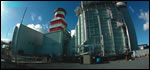
Richard Douthwaite explains how inadequate conventional energy generation is and reveals the potential that combined heat and power & energy service companies can offer.

Welcome to the archive of Construct Ireland, the award-winning Irish green building magazine which spawned Passive House Plus.
The feature articles in these archives span from 2003 to 2011, including case studies on hundreds of Irish sustainable buildings and dozens of investigative pieces on everything from green design and building methods, to the economic arguments for low energy construction.
While these articles appeared in an Irish publication, the vast majority of the content is relevant to our new audience in the UK and further afield. That said, readers from some regions should take care when reading some of the design advice - lots of south facing glazing in New Zealand may not be the wisest choice, for instance.
Dip in, and enjoy!
Richard Douthwaite explains how inadequate conventional energy generation is and reveals the potential that combined heat and power & energy service companies can offer.

At the start of July a key event in the Irish construction industry passed almost entirely unnoticed, with the requirement that the brand new Dwelling Energy Assessment Procedure (DEAP) calculation software be used for all planning applications for new homes with immediate effect. The new tool will be used to calculate Building Energy Ratings (BER) under the requirements of the Energy Performance of Buildings Directive (EPBD). Patrick Daly, lecturer in Environmental Design in the School of Architecture at DIT Bolton St. reveals his view on DEAP and its impact on the industry.
Every eurozone government has debt problems and is cutting its spending, Richard Douthwaite says. Defaults and a prolonged depression are inevitable unless countries inject money into their economies in an unconventional way. A prosperous low-carbon economy would be the result

With an economy fuelled by a government approach to planning that many people equate to a road building and house building free for all, it should come as no surprise that quality of life suffers
In line with a growing consumer demand, the availability of green products is constantly increasing, leading to a situation where product quality need not be compromised in a search for a more eco friendly interior, as Jill Phillips of zero4zero7 interior design explains.

When Construct Ireland asked Vivienne Brophy of the UCD Energy Research Group to select projects for this feature she suggested that the second year UCD Architecture students make the selection, using UCD’s sustainable building rating system tool to verify their choice


The introduction of smart metering later this year presents a great opportunity to engage Irish people en masse into substantially reducing their energy consumption, simply by showing them how much electricity they’re consuming, and how much the cost varies at different times of the day. However, as Richard Douthwaite warns, there is a real risk that smart metering may come in a form that benefits the electricity companies and not the end-user.
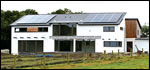
Nothing focuses the mind like a target. The growing impact of Building Energy Ratings (BER) is increasingly encouraging Irish people to aim for the highest energy rating they can. Patrick and Niamh Daly’s house in Mullingar takes this trend to the next level, using a myriad of sustainable green materials and technologies to become a net energy producer and go beyond the limit of the BER scale. John Hearne visited the nearly completed house to find out more.

Much hope has been pinned on the development of new technologies for sinking carbon and generating low impact energy. Richard Douthwaite reveals the major contribution that could be offered by something very old; a soil type that has been in use for 6,000 years.