G rated Limerick home upgraded to A3
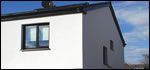
G rated Limerick semi-d upgraded to A3 with full envelope & heating system upgrade

Welcome to the archive of Construct Ireland, the award-winning Irish green building magazine which spawned Passive House Plus.
The feature articles in these archives span from 2003 to 2011, including case studies on hundreds of Irish sustainable buildings and dozens of investigative pieces on everything from green design and building methods, to the economic arguments for low energy construction.
While these articles appeared in an Irish publication, the vast majority of the content is relevant to our new audience in the UK and further afield. That said, readers from some regions should take care when reading some of the design advice - lots of south facing glazing in New Zealand may not be the wisest choice, for instance.
Dip in, and enjoy!
G rated Limerick semi-d upgraded to A3 with full envelope & heating system upgrade
Local authorities upgraded hundreds of houses last year under a €20m government scheme, and the Department of Environment has doubled funding for 2010. With local energy agencies playing a key role on the ground, the programme offers vital lessons for keeping quality high in energy retrofit schemes. Words: Lenny Antonelli
Germany has a reputation for high quality craftsmanship, an attention to detail and a positive attitude to sustainable and healthy housing. Jason Walsh visited a new German-built house in County Dublin to see if the expertise can be exported.
As Ireland struggles to meet its commitments to reducing CO2 emissions in accordance with the Kyoto Protocol, the renewable energy sector continues to flourish as wind farms rapidly develop and solar energy becomes increasingly viable

In light of the failure of AER 5 and the widespread pessimism in the wind industry regarding converting AER 6 contracts into operating wind farms, we asked the six main political parties what their proposals are for the development of an Irish wind industry.


Public private partnership schemes have come to dominate many aspects of Irish infrastructural development, from toll roads to urban regeneration schemes. Jason Walsh asks if they amount to privatisation by stealth and whether they come at too high a social and environmental cost.
Air-tightness is a key factor in any low energy build, but is often overlooked in comparison to energy sources and insulation. Lenny Antonelli examines how air-tightness is achieved in buildings, from design stage down to the final sealing
As our recognition of the problems of dwindling fossil fuel supplies and climate change grows, the need to reduce the energy consumption and carbon emissions of our homes becomes increasingly apparent. Leading energy consultant Patrick Waterfield describes why and how we should switch to zero heating homes.