
From the Construct Ireland archives


Welcome to the archive of Construct Ireland, the award-winning Irish green building magazine which spawned Passive House Plus. The feature articles in these archives span from 2003 to 2011, including case studies on hundreds of Irish sustainable buildings and dozens of investigative pieces on everything from green design and building methods, to the economic arguments for low energy construction. While these articles appeared in an Irish publication, the vast majority of the content is relevant to our new audience in the UK and further afield. That said, readers from some regions should take care when reading some of the design advice - lots of south facing glazing in New Zealand may not be the wisest choice, for instance. Dip in, and enjoy!

Pay as you save

Pay as you save
In an ideal world every occupied building in Ireland would be energy upgraded to the highest standard, tapping into numerous benefits for the building occupant, the construction industry and society as a whole. Construct Ireland is calling for the introduction of pay as you save, a repayment model which offers the potential of making significant energy upgrade investments achievable in the vast majority of Irish buildings, as Jeff Colley reveals.
International selection

Moy Isover International awards
Innovative low energy construction is rarely recognised on a European scale. The Isover Energy Efficiency Awards are one exception — here are nominations from across the continent that were celebrated at the European awards ceremony in Barcelona on 2 June

Passivhaus or passive solar house?

Passivhaus Or Passive Solar House
Few concepts in sustainable design have caught on like the passive house. Since the construction of the first passive house in Germany in 1990, an estimated 15 to 20,000 houses have been built to what is arguably the world’s leading low energy building standard. Drawing from his experience in sustainable building since the early 1980s, Bill Quigley of NuTech Renewables posits an alternative approach.

The Active Solar House

0301-activesolarhousetitle.jpg
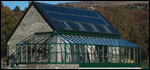
Ernst Posthuma of Solarcon sheds light on a demonstration project in west Cork that combines passive and active solar gains to remarkable effect.

Deconstruct Ireland

Deconstruct Ireland
The environmental impact of the built environment extends far beyond energy consumption and carbon emissions throughout a building’s intended lifespan. Architect and sustainable design consultant Sinéad Cullen of DW EcoCo & BE Architecture explains why there’s a need to design buildings that can be deconstructed rather than destroyed once they reach their end of life, and looks at the obstacles to be overcome to make this happen.

Wright On

0311-WrightOnTITLE.jpg
With the building of a new house in Greystones, County Wicklow, Ireland has become only the third country to feature the work of Frank Lloyd Wright. Jason Walsh visited the site to see if Wright's designs might just represent the kind of thinking required in today's energy-conscious buildings.

Heating need not cost the Earth

If the issue of sustainability is to truly be on the agenda in terms of construction and development, it is nowhere more evident than in how we approach insulation. Recognition of the economic and environmental benefits of properly insulating our buildings is being called for by experts on environmentally conscious construction, such as RTE TV presenter Duncan Stewart

Passive reaches new heights at UCD student halls

The winner of the sustainability award at the 2011 Irish Architecture awards, Roebuck Castle student residence at UCD’s Belfield campus is also the biggest certified passive house project built to date in Ireland and the UK. Tony Rigg of Kavanagh Tuite Architects explains how such a significant building achieved passive results.

Generation 'S'

0212generationtitle.jpg

Kirk Shanks, Senior Researcher at the Sustainability Research Development Group, the Focas Institute, DIT describes the development of this new sustainable generation.


Laughing Stock

Patrick Daly  highlights that the energy refurbishment of our existing housing stock must become a priority
Patrick Daly  highlights that the energy refurbishment of our existing housing stock must become a priority. Daly has undertaken a retrospective DEAP case study assessment of an example house and its BER ratings, with staggering results.