The natural step

A framework for strategic sustainability is essential if we’re serious about greening the Irish built environment.
According to green architect Pat Barry, we should look no further than The Natural Step.

Welcome to the archive of Construct Ireland, the award-winning Irish green building magazine which spawned Passive House Plus.
The feature articles in these archives span from 2003 to 2011, including case studies on hundreds of Irish sustainable buildings and dozens of investigative pieces on everything from green design and building methods, to the economic arguments for low energy construction.
While these articles appeared in an Irish publication, the vast majority of the content is relevant to our new audience in the UK and further afield. That said, readers from some regions should take care when reading some of the design advice - lots of south facing glazing in New Zealand may not be the wisest choice, for instance.
Dip in, and enjoy!
A framework for strategic sustainability is essential if we’re serious about greening the Irish built environment.
According to green architect Pat Barry, we should look no further than The Natural Step.
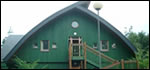
The building is the first all timber office complex in Ireland. It covers almost 2,300m2 of floor space and provides accommodation for almost 100 staff working in a wide range of forestry related disciplines.
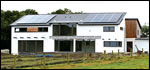
Nothing focuses the mind like a target. The growing impact of Building Energy Ratings (BER) is increasingly encouraging Irish people to aim for the highest energy rating they can. Patrick and Niamh Daly’s house in Mullingar takes this trend to the next level, using a myriad of sustainable green materials and technologies to become a net energy producer and go beyond the limit of the BER scale. John Hearne visited the nearly completed house to find out more.
Chris Croly from BDP outlines the low energy and renewable energy strategies used in University College Cork’s new Environmental Research Institute, a test bed for the design and performance of sustainable buildings, which is ideally suited to housing the 200+ environmental projects carried out by its researchers.
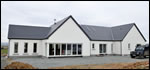
After a long struggle to build their home, Karen and Steve Ward finally got their wish — an energy efficient, timber frame house that boasts a palette of healthy and ecological materials and a fully renewable heating system.
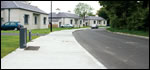
In the future, the high cost and scarcity of fossil energy may force a shift towards retaining and modernising old buildings, thereby avoiding the use of huge amounts of energy to manufacture building materials. John Hearne visited the Belvedere Orphanage, a group of 19th century dwellings whose low energy refurbishment may offer a template for development in the future, by using wood pellet district heating and a host of energy saving measures whilst nonetheless paying great attention to preserving the buildings’ heritage value.
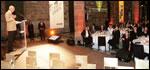
Innovative low energy construction is rarely recognised on a European scale. The Isover Energy Efficiency Awards are one exception — here are nominations from across the continent that were celebrated at the European awards ceremony in Barcelona on 2 June
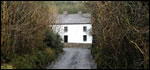
Turning a ruined farm house into a usable dwelling has been a dream for decades, but can an age-old structure really be brought-up to the cutting edge of energy efficiency? Architect Frank Cooney has found a way with a ruin in Cavan currently undergoing renovation. Jason Walsh visited the site to find out more.
Hugh Dorrian, member of the Main Committee of the recently launched Building Limes Forum Ireland reveals lime is regaining ground as a key material not only in conservation projects, but in new build.

The government is aiming to energy upgrade one million buildings by 2020, but huge investment will be needed to reach that goal as finance expert Jack O’Keeffe of Larchmont Consulting explains