From the Construct Ireland archives


Welcome to the archive of Construct Ireland, the award-winning Irish green building magazine which spawned Passive House Plus. The feature articles in these archives span from 2003 to 2011, including case studies on hundreds of Irish sustainable buildings and dozens of investigative pieces on everything from green design and building methods, to the economic arguments for low energy construction. While these articles appeared in an Irish publication, the vast majority of the content is relevant to our new audience in the UK and further afield. That said, readers from some regions should take care when reading some of the design advice - lots of south facing glazing in New Zealand may not be the wisest choice, for instance. Dip in, and enjoy!

A Lesson in Energy Efficiency

0302-energyeffiencylessontitle.jpg
The Department of Education has made its commitment to energy efficiency and CO2 reduction clear in developing and bringing into practice targets for primary school design that aim for less than half of the accepted good practice in the field. Project coordinator John Dolan, Senior Engineer with the Department of Education explains how this approach works within normal Departmental budgetary limits to create school buildings that show the way ahead for building designers.
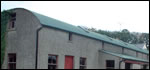

Slane barn retrofit

Slane Barn
Renovated agricultural barn marries its traditional look with modern green features

Cutting Edge

Cliffs of Moher Visitor Centre
Building a visitor centre at such an evocative site as the Cliffs of Moher, one of Ireland’s greatest tourist attractions must have been something of a challenge. By attempting to cater for visitors, the centre could so easily have ruined the rugged, barren landscape which makes people visit in the first place. John Hearne visited the new interpretive centre to discover a building which addresses this problem by becoming part of the landscape, whilst using eco technologies to reduce the building’s strain on the broader environment.

Breaking the mould - part II

The previous edition of Construct Ireland featured an article by leading green architect Joseph Little analysing the insulated dry-lined blockwork walls typical of many homes in Irish housing estates, looking particularly at moisture movement within the external walls. Continuing on from that article, Little looks at the implications of several ways of insulating houses of hollow block construction.

Coillte Teoranta

0208coilltetitle.jpg
The building is the first all timber office complex in Ireland. It covers almost 2,300m2 of floor space and provides accommodation for almost 100 staff working in a wide range of forestry related disciplines.

Heating need not cost the Earth

If the issue of sustainability is to truly be on the agenda in terms of construction and development, it is nowhere more evident than in how we approach insulation. Recognition of the economic and environmental benefits of properly insulating our buildings is being called for by experts on environmentally conscious construction, such as RTE TV presenter Duncan Stewart

Part L Revealed

0311-PartLRevealedTITLE.jpg
Since the announcement last September by the Minister for the Environment of substantial improvements to be made under Part L of the Building Regulations, speculation has been rife in the construction industry about what the details of the updated regulations would entail. Jeff Colley examines some of the key parts of a regulatory improvement that will help the Irish construction industry to modernise and meet the demands of a rapidly changing world.

Stillorgan upgrade

Stillorgan upgrade
An energy conscious renovation and extension in south Dublin breathes new life into a typical semi detached home — the house is now wrapped with external insulation and boasts breathable and ecological materials too.

Renewables in Residence

0304-renewablesinresidencetitle.jpg
At Tom Heneghan’s new development in Dromard, Belmullet, Co. Mayo, it’s a case of sixteen units down, eleven to go as Construct Ireland goes to press. Exceeding the thermal performance requirements of the Building Regulations by some 60%, these houses incorporate a range of innovative and affordable sustainable building technologies which together deliver high comfort, low energy living, as John Hearne reveals.

Social Capital

Social Capital
Local authorities upgraded hundreds of houses last year under a €20m government scheme, and the Department of Environment has doubled funding for 2010. With local energy agencies playing a key role on the ground, the programme offers vital lessons for keeping quality high in energy retrofit schemes. Words: Lenny Antonelli